Friday, August 2, 2013

We Shaped One Another, We Let Each Other Be


Our lives twist and turn every which way. Like the tidal waves of oceans, we absorb everything within our reach, needed or not - from technicolored shells, to treasured, incredible creatures, to belligerent garbage, aimed at our destruction. We grab it all. Hungrily, languidly. It shifts inside us, builds and changes us. Then, we spit it back out, appropriately or not, for the world to see - out of context, in character. Our audience stands amazed at the shoreline, watching it all uncover, then recede. Soon, we are alone again, just as we always were - a mysterious, entangled mass of experiences, humans, stories - bloated, and shuffling with life below the surface. 

Who gets us? Who knows us? Our authentic selves, without motive second-guessing, without an agenda. Whom do we trust? Who preserves and fights for us (even when we are not willing to do it)?

Friends, perhaps? Yes, they do. They DO! I've wondered why. I've asked how. For the benefit of my kids, I thought it worthwhile.


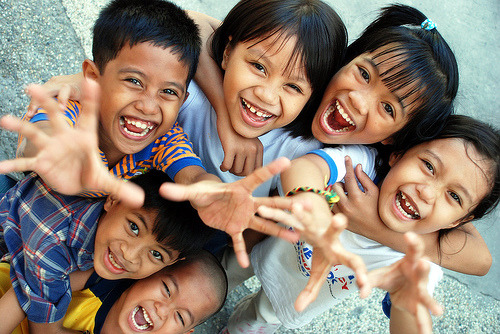
My childhood was steady. Relatively unique to the place and the time I grew up in, but it was steady, which also made it comforting. I felt safe. My people and I spend summers - from morning until after dark - playing, kicking up dirt, stones, then, with growing agility, sports balls. The parking lot between our two residential buildings became a bustling stage for life-or-death matches of dodgeball. The metal bar, reminiscent of a miniaturized, unforgiving volleyball net inspired hyper-intense volleyball matches, intercepted by the occasional adult, who came to dust-off the family rug at the behest of a matron. Games of hide-and-seek grew into epic neighborhood-vs.-neighborhood anecdotes of survival. We cried and laughed through it all.

Our ranks were infiltrated with regularity by strayed teenagers, there to bestow their special brand of holier-than-thou wisdom. Grandmas and grandpas took respite on their way from the "good" bakery, or the veggie market. They sat amongst us, the children, listened to our dynamic conversations and chimed in - with a word of caution, outrage, or a simple glance. From omnipotent D'Artagnan-like charismatic instigators, to soothing wise braggadocios, we saw and were moved unknowingly by it all. 

We lived in a grandiose, thrilling universe of adventures - a sphere of inter-activity and influence, which spanned approximately 500 square feet. And we got to know one another - from the speckles in our eyes, to the dreams we laid out, as spoken wishes, as dares, through the rogue laughed-about-chin hair, to the boob comparisons, and petty "best friend" rivalry, to bursts of creativity, and heartbreak. We knew each other, and knew when to push, and when to rescind away. Because this is what friends do. We chose moments to be individually crazy and purposefully isolated, but when each one of us was ready to come back into the fold, we embraced one another back IN ... no questions asked.

That is, until we were ready to answer. We were each other's Tribunal at the Hague, each other's advocates, whatever was needed, at precisely the right time. We raised one another alongside, and some times, against our parents. We shaped one another with care, trust and love. We let each other BE.

I couldn't help but wish for the same kind of freedom for my children. I couldn't help, but worry about them, when I see their friends move away to what might as well be a different galaxy, even if it is *only* a different state. Because the depth and breadth of friendship, many of us know, can only be replicated, when people spend considerable unstructured time together, for years on end. When they are allowed, by circumstances, or cosmic (maybe even parental) design to muse, idle, create, fight freely, negotiate unobstructed, enshrouded by trust, empowered by their faith in one another, interwoven within each other's psyches. Standing strong. Together.

THIS is what I want for my children.

Friday, July 26, 2013

I Hear Guns in the Street: Review of Ryan Coogler's "Fruitvale Station"


“I hear guns in the street,” a daughter worries.
            
“Those are just fireworks.” It’s a role the father often fills – reassuring the child, often without evidence, that everything’s going to be just fine.
            
Michael B. Jordan and Ariana Neal
Ryan Coogler’s Fruitvale Station was winner of both the Audience Award and Grand Jury Prize at Sundance. The Grand Jury honored the film, they say, “for its skillful realization, its devastating emotional impact and its moral and social urgency.” A lot of good films have the first two; it’s that third point, I believe, that makes this film special. It wasn’t coincidence, after all, that its release perfectly aligned with the ruling on George Zimmerman. More on this later.

            
The film opens with Oscar and girlfriend Sophina (Michael B. Jordan and Melonie Diaz) in the midst of a minor quarrel. A voice is heard – “daddy” – from just outside, and Oscar gestures to Sophina to do her thing. “She called you,” Sophina replies. So Oscar goes to it. Daughter Tatiana does seem to call on Oscar more. In this scene, she can’t sleep, and the only remedy is to be by daddy’s side.
            
As we live a day in the life of Oscar, and watch him struggle to keep a job and stay straight, it’s very clear what drives him – providing a good life for his daughter. But I couldn’t help but wonder at times how effective of a father he really is. Preparing for school in the morning, Tatiana asks mom if she can take 2 gummy packs for lunch. Sophina replies, “you can take an apple,” and Tatiana is disappointed. When she’s dropped off at school, we discover that Oscar took the 2 gummy packs, and he gives them to his daughter when mom’s not looking. Tatiana gives him an immediate kiss on the cheek, and runs into school happy.

Melonie Diaz
Is it just me, or is his action completely undermining the order and discipline mom is trying to instill? Not only will Tatiana fail to learn her mother’s lesson in nutrition, but she will also look at mom less favorably. This action isn’t that severe, but it speaks volumes of Oscar’s general character: not respectful of authority, late to work, and serving less as a strong father figure than as a fun uncle to his daughter, racing her to the car after work, and diving into a body pile with her and her cousins every chance he gets.


So yes, he is a flawed character, but with a soft and gentle side we have a few chances to witness. It’s New Years Eve, and before the inevitable fireworks there will be family get-togethers and the stress of cooking. Oscar visits the supermarket where he works (or worked) and finds a young woman clueless about how to make a “fish fry” for her boyfriend and company. We know Oscar’s messed around before, so we catch ourselves in judgment as he confronts this woman. It turns out his intentions are genuine; he’s calling grandma – who’s in the middle of preparing the gumbo for tonight’s meal – so that she can enlighten this naïve young cook.

Octavia Spencer
The young woman is grateful and very warm with Oscar, reflecting the warmth in him. But that warmth is gone in an instant, as Oscar turns on his (former) boss, begging for his job back, even threatening him. There is a deep rage in Oscar, and in this moment we have to suffer through it. It’s a bit child-like – not being able to keep the emotions at bay – and it’s what has dragged him down all along. It’s why he’s struggled to be a proper father for his daughter – not just emotionally, but physically. In a central scene of the film, Oscar is separated from his daughter, and his mother tells him she doesn’t care what he does for Sophina; it’s for Tatiana that he must succeed. In this scene, that rage returns again. The mother is wise enough to know, when she sees it, that it’s Oscar’s downfall. To make a point, she walks out on him right there and then. In this world, she’s probably seen too many succumb to the rage and lose everything for it. Walking out is the most effective way she can make her point.

What happens in the final scenes of the film reveals how necessary that point was. The story of Fruitvale Station, at bottom, is of a man trying desperately to overcome his past, to move beyond the rage and become a grounded and stable father figure. Whether he succeeds at this, you’ll have to judge for yourself; revealing my opinion would mean revealing spoilers. But I will say a little about the two main events that build to the film’s climax. One of them is a decision Oscar makes, which everything up until this point, not least of which is the love of his daughter, has led him to make. The other event is much less in his control. And this is where the “moral and social urgency” I mentioned before comes to play.

It took me a long time to figure out why this film was so affective. I saw it on a Thursday afternoon, with a light crowd of twenty or so, but that was enough to produce cries heard and felt all through the theater. I attended with a young friend, a teenager, who said it was the first movie that touched his heart. For a while, I reasoned that it was affective just like any other story can be affective – we meet someone we can sympathize with, and believe in, and then are shattered when tragedy hits, and struck by deep injustice. But that’s not really the full story, and the makers of this film know it.

Yes, there is injustice here, and that is why the film has gotten so much attention. But that injustice extends beyond the final act of the film; that injustice is, at bottom, the reason why Oscar has the past that he does. It is what his mother implores him to escape, and which, for the love of his daughter, he almost does. A violent setting – of dogs left for dead on the side of the road, of “guns in street” – sets the tone for this hard, often insurmountable life. This is what makes the film so affective: tone and feeling, rather than over-the-top instances of racism and judgment. Racism today, the filmmakers know, acts much more subtly. (That’s the difference between this film and, for example, 2005’s Crash).

That Oscar is faced with rage, and led into the events of the final act, is therefore more deeply understood. The enemy he faces at the Fruitvale train station isn’t the thug he meets from prison or any of the cops that have him on the ground. The enemy is bigger, but also hazier and less concrete, lurking in the background of this story all along. The entire film, then – not just the final incident – drives our despair and heartache. The two images of Tatiana that we are left with are certainly the most crushing I have seen in any film this year.


This is not a light film. But it is a very important one. Unlike many films that attempt to deal with racism, it honestly brings us into this man’s life and struggle, which makes the climax that much more astounding and shocking. It meets the highest aspiration a film can have: to bring us into another life, and leave us with a richer understanding of the world that affects that life. Its “social urgency” comes from its incredible, and painful, honesty.

The film is based on the true story of an incident in the Bay Area on New Year’s Day, 2009. Because the film is so well done, and because we should remember not just this incident but so many others like it, I urge you to see this film. If you are afraid that you will embarrass yourself with tears, trust me, you won’t be alone.

Fruitvale Station is written and directed by Ryan Coogler, distributed in the U.S. by the Weinstein Company, starring Michael B. Jordan, Melonie Diaz, Octavia Spencer, Kevin Durand, Ahna O'Reilly, and Ariana Neal. It opens today at the Jacob Burns Film Center in Pleasantville, NY.

I, The First-time Parent: Rhapsody in Blue

I am taken. Completely, irreversibly, mysteriously, expectedly, rapturously taken. I thought I wouldn't forget the moments that made up the earlier years of my being a parent. So much of it evaporated into the air. Here's what stayed.

Felt so full for awhile there. As if I couldn't take another bite of life. As if it didn't matter if I would ever see a friend again. Shades up, sporadic sunlight peering through, solitude surrounded me.

Sleep-deprivation had pushed me into another realm of self-abnegation. It was no longer important to do hygiene for myself. It was for him. I woke in the night terrified that I had fallen asleep while nursing him; certain I'd dropped him, only to find him safely cradled in his crib. I would stare: longingly, anxiously, full of anticipation. He wouldn't stir. I would drift into another pang of fitfulness. Time for another nursing. This is how it went.

I curled him in my arms in the shape of a comma. I stared at his mouth in horror. Those gums were annihilators, like piranhas to a cow. His lips would twist sideways, creating the "rooting" effect, and I would cringe, become an overly stretched string, ready to break. I would attempt to breathe, and tell myself if other women could do it, so could I. I would hold my breath and feel the hair get stuck to my neck, the sides of my face, with sweat. Panic would rush through, and then I would recall my husband's words: "Is this yet another thing you won't follow through with?!" I would push through, my comma-shaped baby would latch on, and I would bite my lip, because he nursed on open wounds.

It didn't feel like we were bonding. It felt like masochism, a self-inflicted torture with an oppressive, timed recurrence.

I would lay my head facing him and drift off to sleep, content and atwitter to see him at peace again. I woke with the push and pull of his spastic fingers at dawn. We greeted the sun in each other's embrace swaying in rhythm to Nat King Cole and Nora Jones tunes. I let myself get absorbed by his searching, partly unseen eyes, his shallow, timid inhales, his awkwardly elongated legs. Love flowed around us. We bonded. I felt elated. Until the next feeding, when terror and inadequacy tore into me.

Away from him, I would feel the push of clouds hanging low above ground, and ache for the impossibility to have been better at delivering him, at nursing him. I wept bitterly, desperately.

The days, weeks, and months dragged on. We moved to another home -- bigger, darker, remote. Comma-shaped infant was growing into a healthy, curious, lovely baby. Our nursing time improved. It was no longer an epicenter of existence. It was now only a small part of the routine. My desperation morphed into resentment: of suburbia, of the isolation, of our dependence on a car. Enamored by the mental and physical energizing a city walk of exploration would bring, I longed to replicate the same experience in the suburbs. A limited availability of sidewalks, however, meant that my son and I would loop around in parks like two mice trapped in one of those exercise wheels. It didn't achieve the desired effect - for me, anyway. I could see his fascination with every moving object, from the breeze-rustled leaves, to the darting children on the playgrounds. He looked almost always quietly content. It amazed me.

Back home I would close the door to his room and lie on the floor next to him. My eyes would close, and I would only hear the little noises he would make as he went through his little conglomerate of baby chew-ons. The sounds would be so soothing they would put me to sleep, a coma-like state that would last for mere minutes. I would come to with a start, with an abrupt onset of panic, having realized that I'd lost track of his movements. He would look just as serene as ever. So easy-going, so the opposite of me, it seemed.

The cloud would hang lower. It felt like my husband was never there. It felt as if he didn't care. I felt as though I talked to no one, but my child. A keen awareness of my need to connect with other creatures of similar headspace only led to more agony. Thoughts, emotions smashed against the confines of my ribcage. They would twist and turn frantically trying to escape. Instead I would suffocate, strangle them ardently, methodically. But they would still reside stoically in the abyss of my soul. A struggle of life and death.

Then a childhood friend came from across the pond. My heart fluttered, and new brand of thoughts sparked my brain.The clouds began to shift. A glimmer of hope shone in. I came to. Enlivened.  

What do you recall from your early #parenting days? We would love to hear below, or here.

Friday, July 12, 2013

Through Children's Eyes: #Parenting Lessons

ON SELF-CONTROL

I stood in the middle of our living room, a gaping backpack in one hand, brain spinning as my internal clock was ticking. "Where are the Bulgarian textbooks?" I asked with a hint of distress, but at no one in particular, and hoping against hope for an answer. Eyes scouring the view of our very lived-in living room, I felt my blood pressure rising. I'd just bounced the breakfast plates off the table and into the sink, but traces of food and liquid left a mark on the table that needed to be taken care of. Lunches were packed, but backpacks were still not ready, and I could just feel the longing stares of dogs waiting to go out. "I put them on the piano grand last week," I thought to myself. There was practically nil chance of discovery amongst a stack of piano and children's books, and months-worth of kid art. It had finally happened. Contrary to every care suggestion, I'd  surreptitiously turned the piano into yet another storage unit. Our organizational saving grace!  I caught sight of Ben, the 5-year-old, sitting on the floor, sneaker in hand looking around indeterminately. "Hurry up! Put your shoes on!" I barked. I knew it was possibly going to take at least 10 mins of reminders before he finally accomplished the task. Sam, the 7-year-old, steering near me, and putting on a sweater, shot a quick look in my direction, and said half as if to poke fun, half matter-of-fact: "You are about to start panicking, mama! Don't panic, because then I'll start panicking!" I froze. Nothing like your young child to call you out on a behavior you don't much like modeling for your offspring.


It is a shocking (at least for me) fact of parenthood that children proactively and spontaneously help us learn more about ourselves. They are miniaturized versions of Ivy-league-trained therapists, whose strength is in pushing us, where elegantly, where crudely, into self-improvement. I am grateful! Hopefully, also receptive of the unintended criticism for I do tend to get lost in the daily grind to the extent where I am simply led by impulse and inertia. The exact opposite of what has recently re-surfaced as a personal quest - the ever-moving target of mindfulness and self-awareness as function of contentment and happiness. Yes, thanks to advances in neuroscience we preoccupy ourselves with limiting fast-paced TV programming, and expanding activities like swimming and martial arts for the benefit of our children's executive brains, but how come no one is asking the question (if they have, please share findings): how does parenthood affect adult executive function?

Nothing has tested my self-restraint, abrupt task-switching ability, planning in the near and long-term, impulse- control and related activities more than day-to-day parenting. When we find ourselves having to prioritize between 20+ tasks, noises, and demands every half hour of each day, it might feel like we are pressured against a wall and fighting to keep our sanity within an inch of our breath. Still we are to show patience,  understanding, and optimism to our children and teach them to navigate through their own maze of conflicting feelings and know-how. We try our best, but humanly and fatefully fail to hit all of our targets. What gets us anxious is the not knowing of where we'd missed. Because if we knew,  we are sure to fix it. Or so we tell ourselves. So I tell myself.

ON SMILING MORE


We had a 10-year-old family visitor for three weeks last spring. Not unlike your typical over-achieving American-born Chinese. She is intelligent, confident, and beautiful; spews talent and charisma. Fascinated, my boys gaze at her in sheer unmasked admiration. She is a heroine, a goddess, brought to them from the skies to show them another mysterious and inspired way of being.

At night, with boys gone to bed, she unravels before my eyes and ears. She says her parents fight. They don't EVER smile at her. She can't make them happy. They don't spend time with her. The only time they engage with her is when they command her to do schoolwork, or play the piano. She doesn't share with them what goes on with friends in school, for fear of getting into trouble, for fear of being misunderstood. Her stream of words is accompanied by a flood of tears. She is inconsolable.


My mind reels.  I know her parents love and dote on her. I know they expect a lot from her, but she is their only child, their pride and joy; their whole world wrapped in one. She may know it, but doesn't feel it. She may feel it, but doesn't know it. I shudder at the thought of my children feeling alone and unheard, disconnected from the people who love them the most. I stroke her head and listen, then listen some more. I tell her what I think she needs to hear, what I know to be true. Her mom and dad love her. If she found it difficult to talk to them, she could try putting thought to paper, approach them with the wonder of the written word. I tell myself what I need to hear, what I know to be true: "Peer into your children's eyes with a smile on your face. Let them know they are welcome and embraced."

ON THE BIG QUESTIONS

In the mountain town of Bansko, Bulgaria, I sit on a bench and watch my boys play soccer. A boy from an earlier evening approaches and sits by me, an eager smile on his face. He tells me his name is Ivan. He is a kick boxer, gregarious and friendly; loves The Hobbit and Harry Potter. At the tender age of 9, he already knows he will be a world traveler and a writer. He volunteers he is the author of a comic book, which he gifted to his 2-year-old stepsister. There's an abrupt pause in our conversation before he posits the BIG question: " One thing I never understood is why my parents got a divorce!" I hold my breath. Was this for me to explain?! It couldn't be. I only just met him. Yet there he was. The air around him pulsates in agonizing anticipation. And I suspect it isn't the first time he's asked this question. Did he ever get an answer?

Preoccupied with protecting our children, we fall prey to the proposition of delaying the telling of hard truths. Thus, our children hear them from the most unexpected sources; occasionally accompanied by explanations, most of the time open to their own interpretations. It isn't a bad thing in and of itself, because it shows them varied ways of thinking, teaches them mental self-reliance and critical acuity. But when looked through the prism of our parent-to-child relationship, then the measure of closeness and trust between us is affected in the negative. More of the same follows. We all suffer ... in isolation ... from one another. Hard, indeed, some truths are. But they need telling.

Let's get the conversation ball rolling! We would  love to hear what lessons children around you have taught you, or your own perspective on any of the above.

Friday, June 28, 2013

International Travel with Kids: Credo and Guidelines

Greetings from Paris, London, Rome, Sofia, Montreal, Beijing, Vienna, Nairobi, Sao Paolo, the world! Wish you were here!  If you are anything like my husband and I -- slightly rebellious and not willing to stay bogged down, just because we have had kids -- or else, are looking forward to a time spent traveling with your offspring --  or have been wondering why it makes sense to travel with young kids -- you might enjoy, or find useful the following.


Before I get ahead of myself allow me to answer the why? question. Why travel abroad with young children? Why is it worth the added work? Being the product of a mixed marriage of ardent travelers, the answer for me is an obvious one. But for this exercise, I prefer to employ my 7-year-olds perspective. Having traveled to 13 countries on 3 continents, he revels at the idea of seeing and experiencing something new. In his own words he loves to travel to other countries, because he "gets to taste different things, play new games, learn new languages." I probe further, trying to see if there is a more depth there, and find out he thinks the exposure and experience will enable him to talk to different people, understand and help them, or be helped by them. Isn't this the essence of what we call peace and conflict resolution? 

Sure, travel is expensive. But isn't it a worthwhile investment? Shouldn't we place priority on raising children with mental flexibility, capable of layered, multi-dimensional thinking, who are truly invested in this world; who don't perceive a path to success as a zero-sum game? We have become deeply aware of the fact that the Earth's prognosis is going to need generations of children, who are daringly capable of thinking outside the box, who know how to engage and develop unlikely prospects. Some people are born with this type of genius, but for most of us, it needs to be nurtured into being. International travel in the formative years of a child is a guaranteed way of accomplishing this. 

An article in Today's Parent, titled "Kids behavior: 10 things to forgive them for (and why)," pointed to inflexibility, impatience, immaturity, lack of empathy, and meanness as behaviors we should expect our children to outgrow. It might be the case for many. For most, however, unless we prepare ourselves to take steps to challenge these behaviors peaceably, systematically, and for a big portion of the time - indirectly - they will become traits. It is similar to teaching your children to read, or to talking to them about drugs. None of the influence we hope to exert on our kids happens in the course of a few planned conversations. Whatever it is that becomes part and parcel of their constitution, they learn through a combination of organic repetitions and discoveries. Hence, the suggestion, if you want to raise kids with palpable resourcefulness, flexibility and open-mindedness, try pushing them, and yourselves, a little outside of your comfort zone.

On to the more practicable aspects of this conversation!

You don't need the financial and logistic resources of people like Brad Pitt and Angelina Jolie to take your children along on international travel. As far as I am concerned, all we truly need is international travel documents, like up-to-date passports and (sometimes) corresponding visas, occasional vaccine shots, a healthy dose of open-mindedness and flexibility, some cash, and the rest are details that can be figured out as you go along. Still travel decision-making can be anxiety-ridden, but with the wealth of information at our fingertips, and some self-reminding to keep things in perspective, you can do it. Easy! Remember - you don't need to hear and experience the world all at once.


RESEARCH THE PLACE YOU WANT TO VISIT

Knowing basics like grocery and pharmacy hours, will prepare you for the unexpected, but almost always, mandatory trip to buy essentials at a more affordable price. For instance, in many European cities you will not be able to find an open grocery store on Sundays. In cities like London, you will find that each day offers different closing hours, but as a rule don't plan to do any shopping past 6pm.

But what happens if your child gets sick? On a recent trip to Beijing one of our kids ended up with conjunctivitis, triggered by the heavy air pollution. We went to a local children's hospital, were speedily seen by a doctor, got a prescription and were back at our home base within a couple of hours. All at fraction of the cost for its U.S. equivalent. Alternatively, many big cities in the world have clinics and hospitals that cater directly to international visitors with multiple languages spoken by doctors and staff on site. Some of these would even accept your health insurance. Generally, you might have to pay upfront and then get reimbursed, just make sure get everything in writing from doctors, and if possible in English. We have found, however, that paying-out-pocket saves a big hassle, because health care is significantly cheaper outside of the U.S.

PLAN WELL, BUT BE FLEXIBLE

It may not be needed, but if you travel via plane with short layovers, pack with a view to at least some of your bags arriving at your destination much later than you. Include a lightweight version of whatever you might need, from diapers and creams, to a change of clothes in your carryon. In addition, don't be tempted to organize luggage exclusively according to the individuals traveling on this trip. Have mixed content ownership bags, because it happens occasionally that only some of your bags will be misplaced.  If every person on your trip has their own bag, then you run the risk of not having what you need for one or two of you for some time. And we all know how this types of uneven situations get perceived as "unfair" by kids, and then in turn affect the group morale, and your ability to have a good time.

When my husband and I travelled to Paris, we made sure to pack enough diapers for our 18-month-old son to last him the entire trip. In addition, I'd packed twice as many diapers in my carryon luggage, than I thought I would need. Yet even this proved insufficient after the airline lost some of our bags for days due to a short layover in London. We'd arrived in Paris on an early Saturday morning and kept hopeful that our bags will turn up before we'd REALLY need them. We didn't even consider buying extra diapers at that point. By the time we'd returned to our hotel late at night, our bags had not been recovered. We'd missed the opportunity to purchase diapers. By the following Sunday afternoon, with stores closed and our last diaper in use, we resorted to using swim diapers, which were far less absorbent. That didn't stop us from having a blast walking the streets of the City of Lights, munching on crepes, enjoying local playgrounds, riding a donkey at the foot of the Eiffel tower. At dusk, we did end up hanging out in line for the Eiffel tower elevators with a leak and uncertain diaper prospects. We took it in stride, focused on the experience and skipped a beat only at the panoramic sight of Paris below us.


HAVE A LITTLE TRUST/TAKE CHANCES

On a trip to Italy for a friends' wedding we stayed at a family hotel in the town of LaScala, on the Amalfi Coast. The place was as picturesque as its people were hospitable. As soon as we ordered dinner, the family matron came over to gush at our boy and with expressive combination of gesticulations and Italian communicated that she was going to take our son, so that we could enjoy our dinner in peace. We laughed it off, but soon after our son finished eating, she was back smiling widely and telling us she was going to take him to play with her granddaughter. She disappeared with our son out of sight before we could say anything.

Whenever I retell this story, I see the faces of my American friends cringe in anxiety and bewilderment. This reaction is  possibly a function of our eagerness to control every scenario and outcome, a rather unrealistic goal.  If I consider the local culture and the specific setting in our situation (a small town, the family serviced our friends' wedding party), the event screams of normalcy. Our son got a rare opportunity to gain a glimpse of how an Italian family interacts and plays, without the intrusion of our analysis. Hence, the credo I travel by, have a little trust in people, even in foreign places, let them step in and be part of your experience. It will make for some great memories.


LEAVE ROOM FOR SPONTANEITY

For most of us, traveling great cross-oceanic distances is a seldom and treasured occurrence. As a result, we feel the need to plan everything to pretty minute details.

On a trip to Athens, Greece, we'd planned a number of tours over the course of a few days. By the end of the second day our children were visibly tired of this grown-up tourist regimen, so we decided to take a break from sightseeing and steer in direction of the nearest playground. Our kiddos made friends with an older child, who spoke a little English and took an interest in them. The kids were once again beaming, and batteries re-charged, ready to continue on our exploration of an ancient city. This has worked for us so well, that we have turned the hunt for  local playgrounds, and meshing with locals children into a repeated ritual.


MANAGE YOUR EXPECTATIONS/EXPECT DIFFERENT
I have made some mistakes, mostly related to how much I think my kids can handle. On a trip to Munich, Germany, when my younger son was just short of 3 years of age, and older one 4 and a half, I made a decision not to take a stroller. In a normal situation at home, I'd stopped using them a couple of months prior, so I thought we'd be able to handle the trip without them.

Little did I know how this would drastically limit the scope of our expedition. It got to be more physically demanding after, having visited a toy store (I brought it on myself!) on our way to a park, we emerged carrying two bulky and heavy bags. Boys happy and a park filled with a myriad of beautiful ponds and birds, we made our way deep in, and got ... a little lost (shhh, don't tell anyone else, would never admit to it). Barring nap and still dealing with jetleg, the boys were slowing down the pace by the minute, and I knew I had to find our way to the train station ASAP. An hour and a half into it we stepped onto a subway train. With no seat available my little boy sat at my feet and fell fast asleep. The older leaned against me for as long as he could stand, finally submitting to the ground himself. Other passengers stared on. I strategized on how to pick up my boy off the ground. Without hurting him, mind you, while still leading the second and carrying our bags. The escalator at the station wasn't operational, so I climbed one step at a time in sheer fear of dropping a kid, or tumbling down the steps alongside the two of them. Luckily, a passerby on the left offered to help. He peeled my son diligently off my hands and I climbed the rest of the way with my remaining boy. My mind shrieked at the thought of this guy taking off with my kid into the distance, but I felt I no longer had a choice. So I quickened the pace, caught up, and we were soon back at our hotel.

Why bring this up? Had we been in Italy or China, someone would have relinquished their seat on the train, but probably wouldn't have offered to help me carry my child up the stairs. In Bulgaria more often than not, people would have helped with both.  Had expected the difference, I would have had an easier and more reasonable time dealing with it. And my kid wouldn't have had to sleep slouched on the floor. But all is well. I am grateful for that stranger; notably humbled by the experience, and better prepared for other adventures at home and abroad.


We would love to hear of YOUR experience in terms of traveling with children abroad. Are there any particular concerns or fears that stop you from pursuing this venture? If you are an international traveler, how has it helped your children grow?

FURTHER READING

Take a look at one family's incredible journey on bikes across North and South America.

Can Taking A Child Abroad Be Fun? A recent CNN article, in which a mother suggests (among other things) that for a first trip abroad with your youngsters, you might want to pick a familiar place. 

And for a parent's perspective on How to Develop Character in Your Children (And Yourself) Through Travel.

Thursday, June 20, 2013

The Better Influence Against The Odds

"No man is an island, entire of itself,
Every man is a piece of the continent,
A part of the main."
John Donne c. 1624


Donne echoes the idea that individuals (unless forever isolated) come into contact with manifold influences, which alongside their genetic makeup, will determine the course of their lives. We rub off on one another, intentionally or not, leave a mark, and morph continually into altered, for better or worse, beings.

As parents we are expected to provide a clear reference point for what is right and what isn't for our children, sometimes it seems irrespective of their age and personalities. This would include everything from the mundane -- like table manners -- to the stuff of which character is made -- like optimism, grit and perseverance. We are expected to prepare them for the "future," for the great unknown.

Not only is this expected. Notably, we put this burden on ourselves, we live the pressure of having to know how to receive, process, and then act in any and all situations, present, impending, or completely hypothetical and unforeseen. It keeps us up at night, makes us crazy. But what happens when the answers that are built into our life circumstances seem inept, unsatisfactory, even dangerous. How do we teach our kids to surmount challenges that we are unsure of how to surmount ourselves, or better yet, haven't even fathomed?

I recently saw "Salma," a film titled after its main protagonist and subject -- a woman poet, who having grown up in a decidedly conservative cultural setting in Tamil, India, found a way (with determination and much serendipitous help from relatives and beyond) to fulfill her life's calling, despite otherwise impossible circumstances. In this particular locale of the world, upon getting their period,  girls are sequestered in basements with little to no view to the outside world until they are married off. Henceforth, they are neither encouraged, nor allowed to attend school. The isolation in which Salma found herself intensified her need to connect with the outside world. She accomplished this through her now of  global renown poetry.


Besides her writing, Salma has welcomed another calling, of reaching out to women in her community and encouraging them to pursue an education against the heavily-stacked odds. She visits homes to lend an ear to each woman's tale of adolescence and marriage and motherhood thereafter. As a film viewer, you are introduced to the same story with varying characters: "I went to school, I got my period, I was forbidden to go to school, and I was married." 

That is, until we are in what appears to be a relatively poorer home of a mother, who shares how instead of submitting to the norm, she opted to send her daughter to the nearby village, postulating the need for continued education. One might infer that this decision came from an already better-educated, enlightened mind, if you will. Instead, the woman admitted she herself had never gone to school. It left me in awe of her foresight and fortitude to withstand what must have been a constant flow of badgering glances and remarks. What prompted her to choose such an uneasy road? Why would she deem education to be important enough of a goal to risk social isolation, when she herself had never experienced the benefits of education?

There are people around us who possess a combination of natural intelligence, intuition, and drive, that are particularly attuned to picking up the cues of impending change around them. Just as they are daring, so are they inspired and encouraged by indirect influences of people of similar make. Just as Salma, the poet, was not truly a self-made story of success, so did not this mother raise her daughter in a vacuum of influences. She planned to do better, inspired by Salma, probably having been all too keenly aware of her own impossible odds. But never fully surrendering to her set of life circumstances. She is one of those of whom we call "a natural born leader," because they never got a chance to lead a school, a company, a country, but nevertheless guided us to a new, augmented understanding of the world. 

In this family's case taking a chance didn't pan out. Her daughter suffered from the  extended separation to the extent that she ended her life. She set herself ablaze, the last horrific memory her mom would ever have of her. I can't imagine the heartache of losing your only child. However, I couldn't help but wonder, were this woman to have another child, would she insist on her continuing her education again? She'd already done one heroic thing, and lost everything. Could she do it again? 

There are, of course, plenty of other more fortunate examples of the same kind of foresight. I recently met Anita Hill at a showing of Frieda Mock's new documentary "Anita: Speaking Truth to Power." During the Q&A, Anita Hill  mentioned that her mother placed a high value on education and was a driving force in her continued education. Born in the 1950s to black parents with unfinished high school careers, farmers from a small Oklahoma community, Hill did not fall on the path of a distinguished legal, academic, and advocacy career by happenstance.


In her book "Re-Imagining Equality: Stories of Gender, Race, and Finding Home" she zeroes in on the connection between her personal and professional accomplishments and her family upbringing. Hill speculates with a fair dose of certainty that despite her relative lack of formal education, her mother had taught her the value of education, hard work and independence. In Anita Hill's memory Erma Hill, her mother, displayed significant prowess "in the areas of human and fiscal resources." Erma had managed a farm and raised 13 educated and self-reliant children  in partnership with  her husband starting with the mid-1920s onwards, a time beseeched by racial and, slightly less obvious, gender segregation. Even though she didn't have an opportunity to transfer her skills onto a larger stage, she was palpably aware of the changing current of the social getup, and knew instinctively that her children would benefit from an expansion of both their intellectual and geographical domain. She sent them off to study, where she thought they'd have a fair shot at a different life. It is due, at least in part, to this awareness and adherence to a higher standard of self-discipline that Anita Hill ended up pursuing what can be qualified as a socially responsible and remarkable career.

It is an extraordinary feat to imagine a life drastically different from your own; a life that deviates or completely departs from your particular set of circumstances. The large majority of us are capable of such change, but we have to feel the hunger, we had to have either been born with it, or it had to have been instilled and nurtured in us. Plus, there had to be a confluence of external conditions, including someone to believe in and influence you into the direction you already long to go.

On the opposite end of this spectrum are generations of individuals who subsist on social welfare. Adept at what may be deemed as manipulating this intricate system of gives and takes, some people appear to be content with what life, or the state, has allotted them, in the very least,  because they don't seem bent on rising above their dependence. If you talked to the guy making my terrace door screen, you'd find out that he believes this dependence is an entrenched mode of thinking, akin to slavery. It happens to be a sure-proof way of keeping the lowest-income groups from stirring the pot, and becoming harbingers of real social change. 


When you are born in depravity, of the financial, social, and worst of all, intellectual kind, and your parents and everyone else around you genuinely believe that there is no way out, it will rub off, it will force you into a mindset of complacency, acquiescence, and general despair. There are no dreams to be had, or empowerment on a very basic level to be sought. However, if you are lucky enough to see, hear, feel, think something different, something that would feed you from the inside out, you are likely to start on a path of personal growth, which who's to say where it's going to lead you? Imagine that for yourself, for your children, and dare I say it ... for the lives of others.